

Well Water Flow Rate
GPM and pressure testing for VA, FHA, USDA, and Conventional Loan files. Lender-ready flow rate certification for North Carolina real estate closings.
Disinterested Third-Party Testing
VA, FHA, and USDA loans require that flow rate measurements be performed by a disinterested third party. This means:
The buyer cannot perform the test
The seller cannot perform the test
The real estate agent cannot perform the test
A relative or party with financial interest in the transaction cannot perform the test
Well Water NC technicians are independent third parties with no stake in the outcome of the transaction. Field measurement, documentation, and certification are handled by trained personnel who do not represent the buyer, seller, or any party in the deal.
Schedule Next-Day Water flow Test
Next-Day and Priority Flow Rate Scheduling
For tight closing deadlines, priority scheduling is available for flow rate testing in North Carolina. Availability depends on property location, access conditions, and current scheduling demand.
Priority flow rate testing is most commonly used when:
Closing dates are within 24 to 48 hours
Underwriting conditions are issued late in the process
A previous flow rate test was rejected or insufficient
Flow rate verification is the last item holding up the deal
Call 984-301-6223 to confirm same-day or next-day availability for your transaction.
Well Flow Rate Testing for North Carolina Real Estate
Well flow rate testing in North Carolina built specifically for real estate transactions and loan underwriting. This service provides documented proof that a private well delivers an adequate water supply for residential use — something lenders, underwriters, and appraisers regularly require before closing.
This is not a general system check. Testing and documentation are structured for VA, FHA, USDA, and conventional loan files and built to support underwriting approval and closing timelines.
What Is a Well Flow Rate Test?
A well flow rate test verifies how much water a well can produce, measured in gallons per minute (GPM). The test simulates peak household usage to confirm the well can support a residential property under normal demand.
Results are documented in a lender-ready certification format so underwriters can quickly confirm the well meets the requirements for residential use.
-
Water production rate (GPM) sustained over a defined time period
Water pressure (PSI) at the point of measurement
Pumping performance under load
Recovery behavior when the test ends (when applicable)
Visual observations of the wellhead and equipment at time of testing
Frequently Asked Questions
-
A well flow rate test measures how much water a private well can produce per minute, recorded in gallons per minute (GPM). The test simulates peak household water usage to verify the well can supply a residential property under normal demand. Lenders use the result to confirm the well meets loan program requirements before closing.
-
FHA generally requires existing wells to deliver between 3 and 5 gallons per minute, sustained over a defined period. HUD Handbook 4000.1 specifies the system must make 720 gallons of water available to each connected existing dwelling during a continuous four-hour period, or 1,200 gallons for each proposed dwelling.
-
VA Minimum Property Requirements emphasize "functional utility" rather than a single fixed GPM number. Most VA appraisers and lenders use 3 GPM as a working benchmark, though specific requirements depend on the property and household demand. The well must support continuous, safe water supply for residential use.
-
USDA Handbook 3555 defers to local and state health authority standards for water supply adequacy. Many USDA lenders apply the FHA-style 3-5 GPM benchmark in practice. Flow rate testing is commonly requested as part of USDA underwriting for properties on private wells.
-
A trained technician connects a flow measurement device to the well system and measures water output in gallons per minute over a sustained run, typically simulating peak household usage. Pressure (PSI), recovery time, and pumping performance are recorded along with GPM. The full test takes approximately 1 to 2 hours depending on conditions.
-
A low flow rate result does not automatically disqualify the property. FHA and VA distinguish between flow rate (production) and water supply (availability). An engineered water storage system can satisfy underwriting requirements even when raw GPM is below benchmark, by storing water from a low-yield well in a holding tank and delivering it to the home on demand at full pressure.
-
The test must be performed by a disinterested third party with no financial interest in the transaction. The buyer, seller, real estate agent, and parties related to them cannot perform the test. Well Water NC technicians meet the third-party requirement under VA, FHA, and USDA standards.
-
Yes. Combining flow rate testing with water quality testing on the same site visit reduces scheduling time and produces a single coordinated documentation package for the loan file. This is the most common arrangement for VA, FHA, and USDA closings on private wells.
-
Flow rate certification documentation is typically delivered within one to three business days after testing. Same-day or next-day delivery is available for time-sensitive closings, subject to scheduling.
-
The terms are often used interchangeably in real estate. Technically, a well yield test measures the maximum sustainable water production of the well over an extended period (sometimes hours), while a flow rate test typically measures GPM under simulated peak household demand. Most real estate transactions need flow rate certification, not full yield testing — but Well Water NC can perform extended yield testing when an underwriter specifically requests it.
-
Pricing depends on property location, access, and whether flow rate testing is combined with water quality testing. Pay-at-closing options are available for qualified transactions. Call 984-301-6223 for a quote tied to your specific closing.
Flow Rate Requirements by Loan Type
Flow rate requirements vary by loan program. Here are the standards Well Water NC tests against:
For all loan types, Well Water NC tests, measures, and documents performance to the standards your lender specifies.
-
FHA requires existing wells to deliver between 3 and 5 gallons per minute. HUD Handbook 4000.1 specifies that the system must make 720 gallons of water available to each connected existing dwelling during a continuous four-hour period, or 1,200 gallons for each proposed dwelling during a four-hour period.
-
VA loans follow Minimum Property Requirements that emphasize "functional utility" — the well must support modern household water demand. While VA does not publish a single fixed GPM number, most VA appraisers and lenders use the 3 GPM benchmark as a working standard. Higher-demand properties may require more.
-
USDA Handbook 3555 defers to local and state health authority standards. Where neither has specific requirements, EPA standards apply. Many USDA lenders apply the same 3-5 GPM benchmark used by FHA.
-
Conventional loan flow rate requirements are set by the lender or underwriter on a case-by-case basis. Many follow FHA or VA-style benchmarks, but specific requirements vary by lender and property type.
When Flow Rate Testing Is Required
Flow rate testing is commonly required when:
A property is served by a private well, and the loan involves VA, FHA, USDA, or certain conventional underwriters
Loan underwriting requests proof of water supply adequacy
The appraiser or inspector flags water capacity concerns during the appraisal
The property is rural or semi-rural with no public water connection
The well has had recent repairs, replacement, or service that could affect performance
A previous flow rate test has expired, and a current measurement is needed for closing
Flow rate certification is a standard condition in many well-based real estate transactions, and it's increasingly being requested separately from water quality testing.
How a Well Flow Rate Test Is Performed
Flow rate testing is performed at the well system using recognized field procedures. Here's what happens during the test:
The technician arrives on-site and conducts a visual inspection of the wellhead and pressure tank
A flow measurement device is connected at an appropriate point in the system
Water flow is measured over a defined period — typically a sustained run that simulates peak household demand
Gallons-per-minute output is recorded at multiple intervals
Water pressure (PSI) is measured during pumping
Recovery time is observed when the test concludes (when applicable)
All measurements, observations, and conditions at the time of testing are documented with a chain-of-custody
The technician acts as a disinterested third party with no financial interest in the transaction, which satisfies VA, FHA, and USDA requirements for sample collection and field measurement.
What's Included in a Flow Rate Certification
A clean flow rate certification matters as much as the test itself. Each Well Water NC certification includes:
Property identification and sampling location statement
Test date, time, and method used
Measured flow rate (GPM) with sustained-run results
Water pressure (PSI) observations
Recovery time documentation (when applicable)
Visual field observations at time of testing
Disinterested third-party certification statement
Chain-of-custody documentation
Lender-formatted summary suitable for underwriting review
Documentation is structured so the lender doesn't have to interpret raw field notes. Everything required for underwriting review is included in one organized package.
What Happens If the Well Doesn't Meet Flow Requirements
If a well does not produce adequate flow during testing, the result is not necessarily a failed transaction.
Common causes of low flow rate:
Seasonal groundwater conditions
Older wells in low-yield aquifers
Recent heavy use or system stress
Pump or pressure tank issues unrelated to the well itself
Well depth and construction limitations
In many cases, low GPM can be addressed without drilling a new well. FHA and VA underwriting guidelines distinguish between flow rate (how fast water comes out of the ground) and water supply (how much water is available to the home).
If a well has low yield, an engineered water storage system is often acceptable to underwriters. The well slowly fills a holding tank over time, and a booster pump delivers water to the house at high pressure on demand. This satisfies "continuous, safe supply" requirements even when raw flow rate is below benchmark.
Other possible corrective actions include:
Pump or pressure tank replacement
Well rehabilitation or hydrofracking
Extended pump-down testing to verify true sustained yield
Well Water NC documents the test conditions, identifies whether the issue is well capacity or system equipment, and supports retesting after corrective action.
Combined Flow Rate and Water Quality Testing
Flow rate testing is often performed alongside water quality testing for the same property. Combining both services on one site visit reduces scheduling time, lowers overall cost, and produces a single coordinated documentation package for the loan file.
Well Water NC offers combined service for:
VA well water testing with flow rate certification
FHA well water testing with flow rate certification
USDA well water testing with flow rate certification
Conventional loan well water and flow rate certification
Call 984-301-6223 to schedule both services in one visit.
How Our Flow Rate Testing Process Works
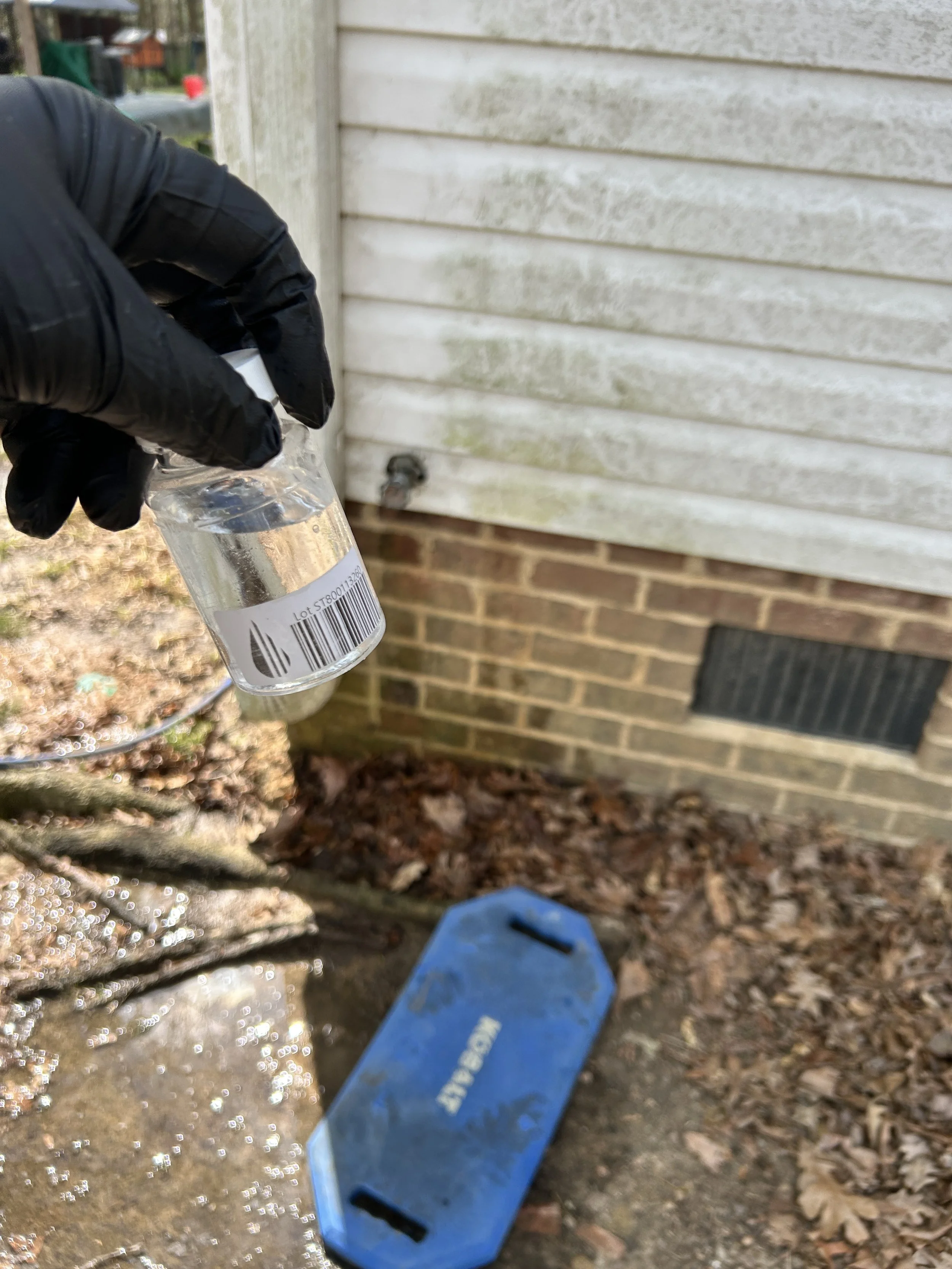
1. Schedule
Call or submit the request form with the property address, loan type, lender contact, and closing date. We confirm scheduling, access requirements, and any specific lender flow rate benchmarks.
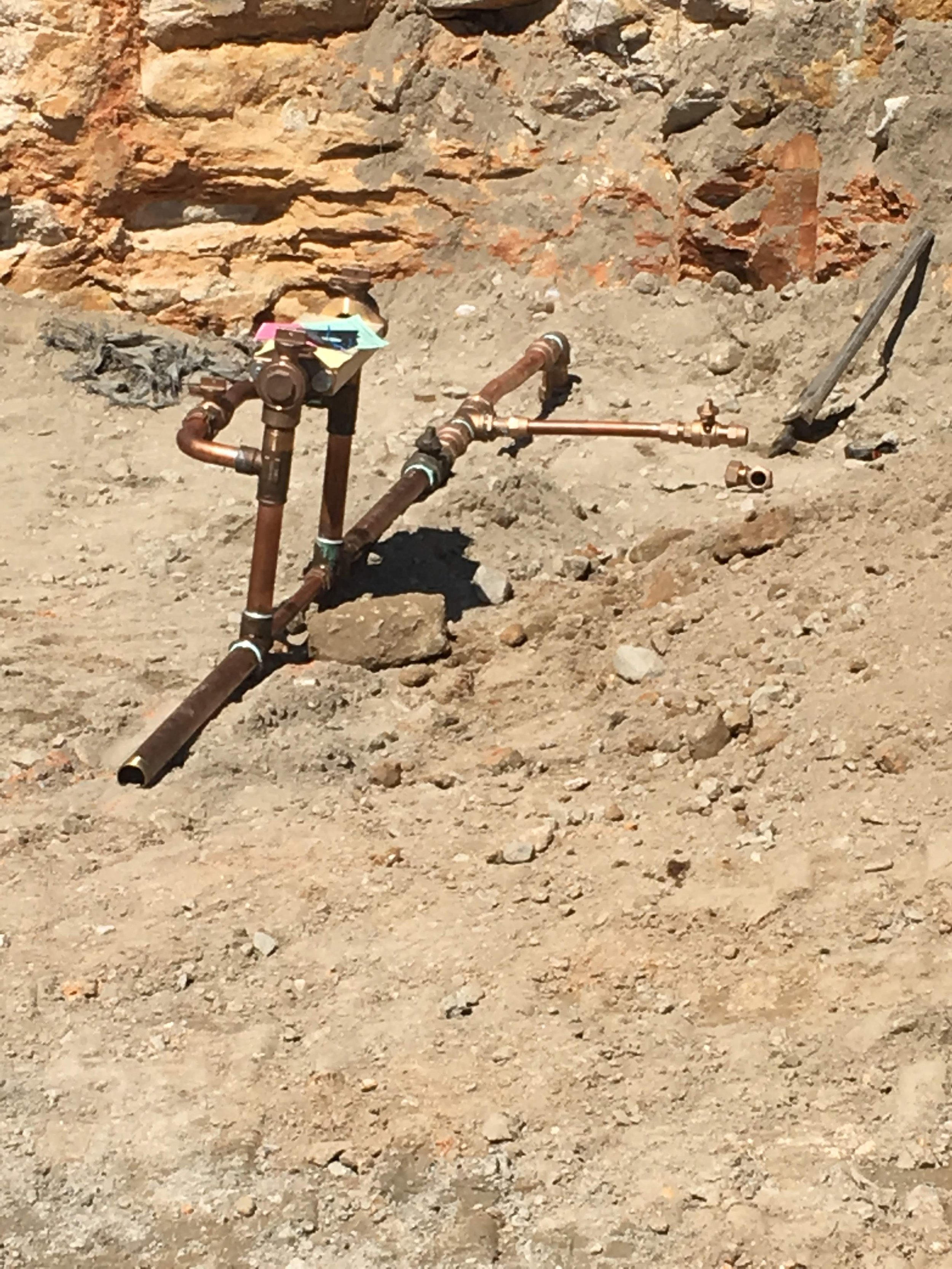
2. Test and Document
A trained Well Water NC technician performs the flow rate test on-site as a disinterested third party, measuring GPM and PSI under sustained-run conditions and documenting all observations with chain-of-custody.
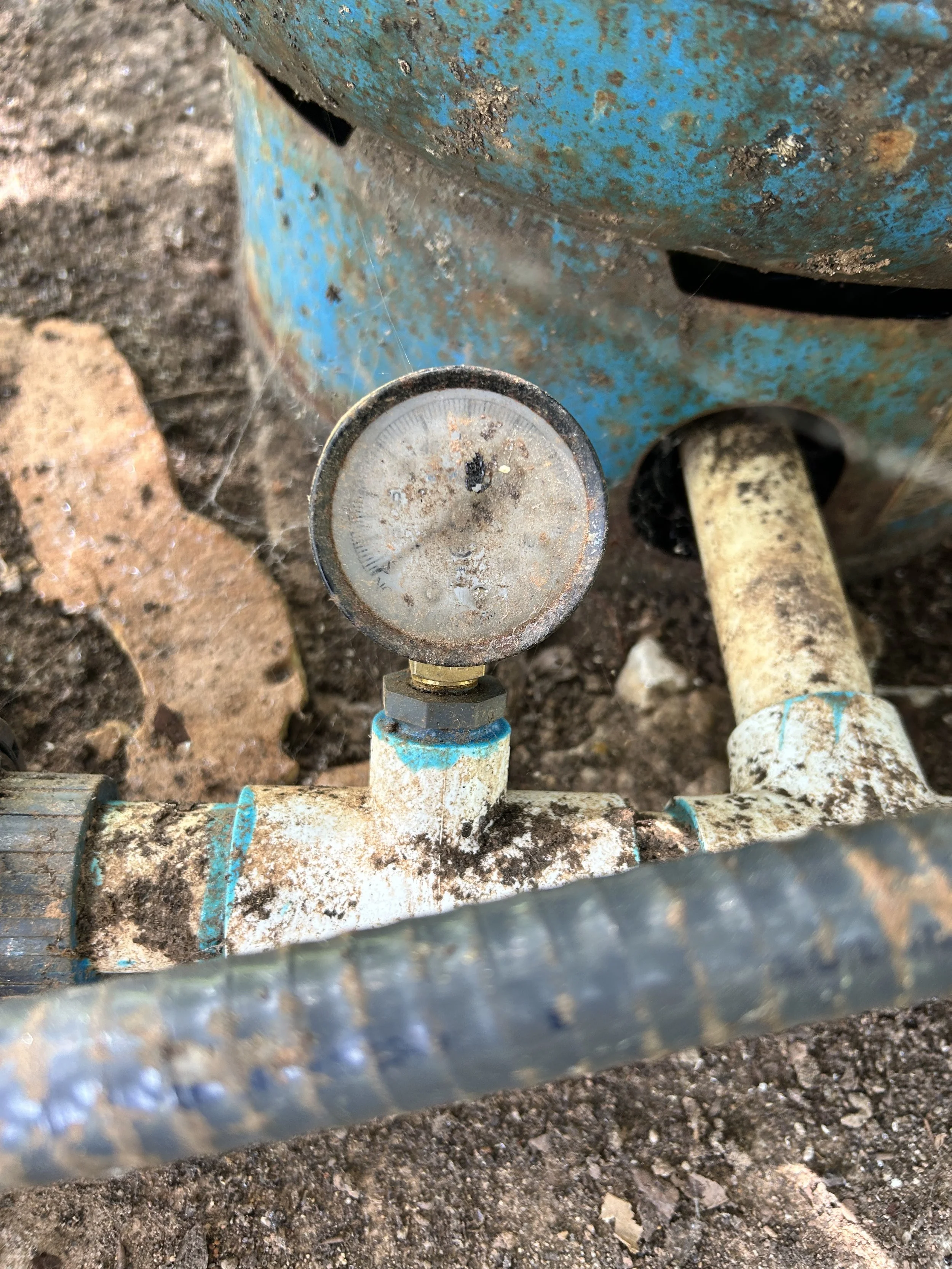
3. Deliver and Close
A lender-ready flow rate certification is delivered to your closing team — buyer, lender, real estate agent, or closing attorney. If the well doesn't meet requirements, we document the conditions and support corrective action and retesting.
Accreditations and Compliance
All flow rate testing follows recognized field measurement procedures and is documented to standards required by VA, FHA, USDA, and conventional lenders. Well Water NC operates as a disinterested third party in alignment with HUD Handbook 4000.1, USDA Handbook 3555, and VA Minimum Property Requirements.
Display credentials for:
Disinterested Third-Party Field Testing
HUD Handbook 4000.1 Aligned
USDA Handbook 3555 Aligned
VA Minimum Property Requirements
What Real Estate Professionals Are Saying
⭐⭐⭐⭐⭐ 10 weeks ago
Needed a well water test for our FHA loan last minute—Mike got it done next day and delivered results in time for closing. Fast, knowledgeable, and reliable.
⭐⭐⭐⭐ 3 weeks ago
Next-day service and fast results for our FHA loan. Mike knows the process and kept our closing on track.
⭐⭐⭐⭐⭐ 19 weeks ago
Best well water testing company in North Carolina for VA, FHA, and real estate closings.
Need a Well Flow Rate Test for Your Closing?
Call now or request service online. Same-day response for active real estate transactions across North Carolina. GPM and PSI testing, lender-ready certification, and disinterested third-party documentation.
Well Water NC
8312 Harps Mill Rd
Raleigh, NC 27615
Well Water NC Hours of Operation:
Monday 9:00 AM to 6:00 PM
Tuesday 9:00 AM to 6:00 PM
Wednesday 9:00 AM to 6:00 PM
Thursday 9:00 AM to 6:00 PM
Friday 9:00 AM to 6:00 PM
Saturday By appointment
Sunday Closed